In My Blackness
What I Learned About Survival, and What I’m Still Unlearning

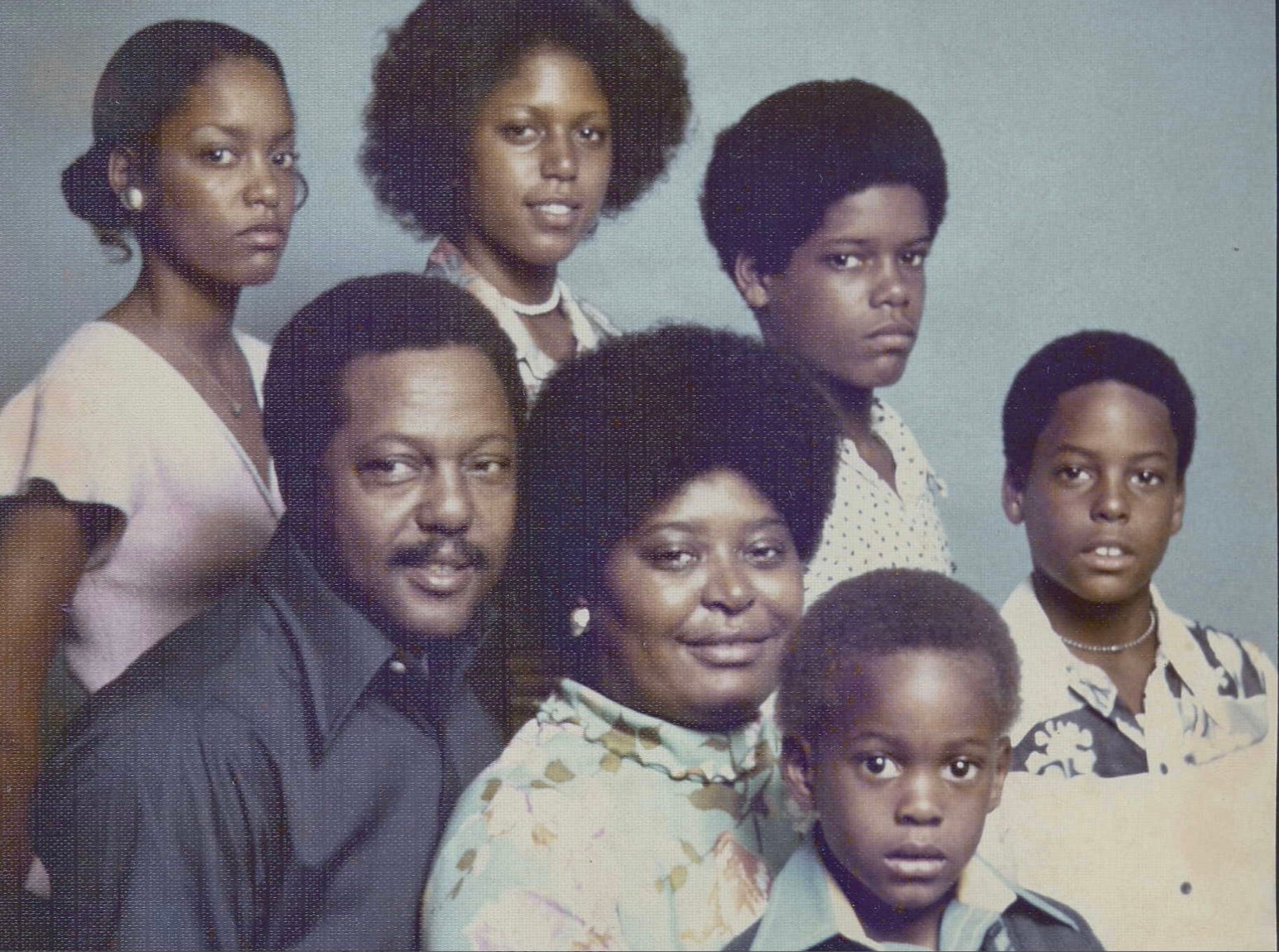
I’ve been thinking a lot about my Blackness lately.
More than I ever have before.
I don’t know if that comes from getting older, or from finally slowing down enough to sit with myself. Or maybe it comes from a lifetime of trying to fit in. To move unnoticed. To be what others have defined as a “good” Black. Not like the “others,” as if I’m some kind of anomaly—a glitch in the matrix.
When I think about it long enough… it sits heavy on my soul.
I remember being about ten years old, standing at a bus stop in Oakland. A white woman walked up and stood next to me. She was wearing her work uniform—I think from the Hoffbrau in the neighborhood, a place not many Black people went to. She seemed kind.
We started talking. At least, I think we did. I don’t remember what sparked her inquisitiveness, but I’m certain I didn’t initiate the conversation. Still, I remember what she asked.
Where do you go to school? And, where do you live?
I told her I went to Saint Louis Bertrand. And I remember the look on her face—just a flicker, but enough. White people have always had this look of surprise mixed with confusion when I didn’t rattle off one of the Black public schools in the neighborhood. Something between surprise and curiosity.
Then I told her where I lived.
“I live in the good part of Oakland.”
Which I didn’t. I lived in the area where most Black soldiers were allowed to purchase homes due to redlining after World War II—on the south side of the tracks, a mile from the city dump, and within walking distance of a factory that barely employed Black people.
And even now, writing that, something in me tightens.
Because what did I mean by that? The “good” part?
What did I think I needed to prove—to her?
I go back to that moment more often than I probably should. And every time I do, there’s a part of me that shrinks a little. Not because I was a child—but because even then, at ten years old, I understood something about the world I was living in.
I understood that I needed to be palatable. Acceptable. Safe.
I didn’t have the language for it back then. But I knew the rules.
Even then, I knew about Emmett Till.
As a Black American—especially a Black boy—there were rules. They weren’t written down anywhere, but they were spoken. Repeated. Implied. Passed down.
I can still hear my mother’s voice clear as day:
“Don’t be out there acting a fool in front of those white folks.”
It wasn’t said with cruelty. It was said with urgency. With protection wrapped inside of it.
But protection has a way of shaping you.
My parents were part of the Silent Generation. They were raised on survival. On keeping your head down. On working hard and not making waves. The goal wasn’t self-expression—it was stability. A job. Benefits. A life that didn’t draw too much attention.
My father came from the South—Louisiana. A small town called Dubach, in Lincoln Parish. My mother, first-generation Californian—born in East Los Angeles, but still rooted in Southern ways of moving through the world.
And when I think back, I don’t remember growing up in a household centered on Black pride.
Not in the way we talk about it now.
That doesn’t mean they were anti-Black. Not at all. But pride… pride requires a certain kind of safety. And I think what they were trying to give us was something else.
Security. Survival. A chance.
Because when you’re living in survival mode, something has to be negotiated.
And sometimes, what gets negotiated… is identity.
You trade parts of it. Soften parts of it. Silence parts of it.
You learn how to move through the world in a way that keeps you safe. Or at least, safer.
And maybe that’s what I was doing at ten years old.
Standing at that bus stop.
Trying, in my own small way, to say:
“I’m not a threat. I belong. I’m one of the good ones.”
And now, all these years later, I sit with that moment differently.
Not with shame.
But with understanding.
Because that little boy wasn’t trying to impress her.
He was trying to survive something he didn’t yet have the words to name.
And unlearning that…
that has been its own kind of work.
The kind of work that asks you to question everything.
The foundation you were raised on.
The lessons passed down to you as truth.
The things you were told would keep you safe.
Taking what my elders gave me—and realizing not all of it was meant to carry me forward.
Some of it was meant to protect me.
Not define me.
And maybe that’s the lesson I’m still learning.
That survival and identity are not the same thing.
That the things we do to stay safe in one season of life
can quietly shape who we believe we’re allowed to be in the next.
And that at some point…
you have to decide for yourself
what parts of you were built out of fear—
and what parts of you are finally free.